
Quick answer
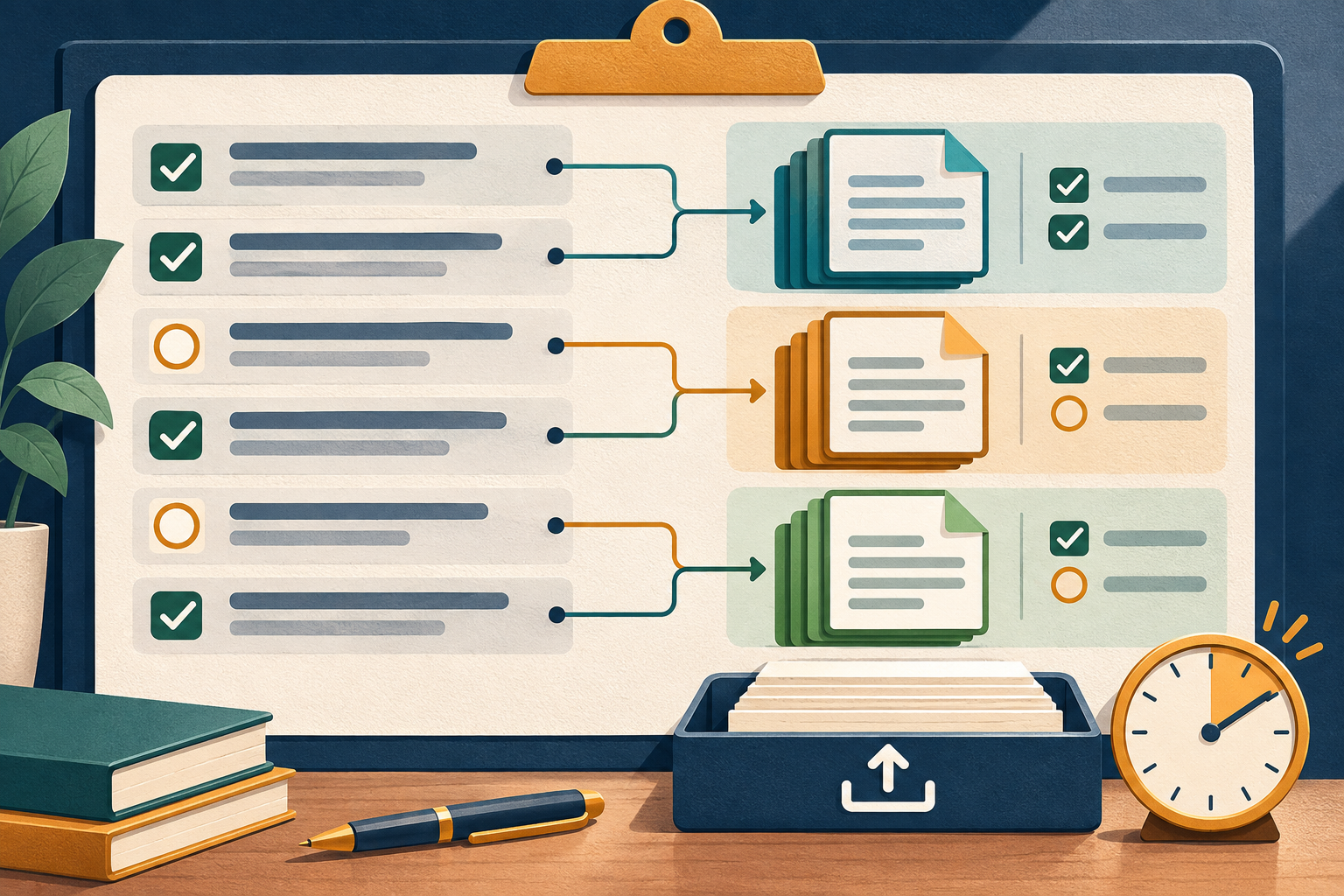
Before you write a government proposal, turn the solicitation into a checklist that connects each instruction to a response owner, source evidence, and final reviewer. Track amendments, file and page limits, required forms, evaluation factors, and delivery time. Use AI to extract and organize requirements, then check every item against the actual solicitation and current agency instructions. Never let a model invent certifications, past performance, staffing, or pricing assumptions.
Our government contractor proposal prompt book can help structure that review. It cannot promise compliance or an award. The solicitation controls the response, and someone on your team has to verify it.
Why proposal teams need a crosswalk
A proposal can read well and still miss a required attachment, exceed a page limit, or answer the evaluation factor in the wrong volume. Small contractors often have one person writing while also chasing past performance references and pricing inputs. A simple requirement crosswalk gives the team one place to see what is done and what is still at risk.
For negotiated procurements under FAR Part 15, the FAR describes Section L as instructions and notices to offerors, and Section M as the evaluation factors and their relative importance. But not every solicitation uses the same structure. Agencies may use different procedures, add agency supplements, or issue deviations. Read the solicitation you actually received, including its attachments and amendments.
Federal acquisition guidance is also changing. The FAR Council’s overhaul page publishes model deviation text and agency-specific deviations. The Council says agencies adopt updates over time, which can create differences in solicitation structure during the transition. For your bid, treat the solicitation and its official amendments as the working instructions. Check the agency-specific language when you have a question.
The public deviation guide is useful for finding an agency’s published material, but do not assume every listed change applies to every opportunity. Check the solicitation date, the clauses it incorporates, any agency supplement, and the amendment history. If two official documents seem to conflict, raise the question through the solicitation’s stated channel rather than deciding which one wins on your own.
Build a compliance matrix before drafting
Start with one row for each requirement, instruction, evaluation factor, and required attachment. Give every row an owner and a place in the response. Keep the source location so someone can reopen the exact page when a question comes up.
| Solicitation item | Source and location | Response section | Owner | Proof or input needed | Status and reviewer |
|---|---|---|---|---|---|
| [Requirement or question] | [Document, section, page, amendment] | [Volume, section, page limit] | [Name or role] | [Approved fact, record, or attachment] | [Open, drafted, checked] |
| [Evaluation factor] | [Section M or stated evaluation language] | [Where the response addresses it] | [Writer] | [Evidence tied to the evaluation point] | [Open, drafted, checked] |
Use exact language for mandatory instructions. If you shorten a requirement in the matrix, keep a source reference to the original. A summary is a navigation aid, not a replacement for the solicitation.
Make the matrix useful to the people doing the work. Give the pricing lead the pricing rules and relevant cost inputs. Give the technical lead the exact page limits and required response topics. Give the final reviewer a short list of high-risk items, such as signatures, certifications, and delivery time. One owner can coordinate the crosswalk, but each row needs someone who can verify the source.
Five AI tasks that can save review time
1. Extract instructions without changing them
Ask AI to list due dates, submission method, file types, volumes, page limits, required forms, signature rules, and amendment acknowledgments. Have it cite the document name and page for every item. Then compare the list with the original solicitation and amendments yourself.
2. Connect requirements to evaluation factors
Give it the evaluation criteria and the draft outline. Ask which requirement appears unanswered or has no evidence assigned. Do not ask it to guess how the agency will score your response. Evaluators apply the stated criteria; the model cannot know what they will decide.
3. Check claims against approved evidence
Provide the approved company facts or reference list and ask the tool to flag any draft sentence that makes a claim outside that material. The person responsible for the proposal must resolve each flag. AI should not add project values, outcomes, certifications, clearances, or staff experience from a pattern it has seen elsewhere.
4. Review amendments and version changes
Ask AI to summarize differences between the original solicitation and each amendment, with page or paragraph references. Then have a human reviewer confirm every change and mark the acknowledgment requirement in the matrix. FAR instructions and agency procedures can specify how amendments are acknowledged, so check the current documents.
5. Run a final mechanical check
Use AI to scan the final outline for empty sections, inconsistent names, missing attachment references, and mismatched section numbers. Run a separate human check for page limits, formatting, signatures, pricing consistency, and successful upload. A generated checklist cannot confirm that the submission system accepted the files.
Use a prompt that asks for evidence, not confidence
Read this solicitation package and its amendments. Create a table of each requirement, instruction, evaluation factor, due date, page or file limit, required form, and submission step. For every row, cite the exact document name and page or section. Do not infer a requirement that is not written. Mark anything unclear as a question for the contracting officer or our contracts advisor. Do not draft company qualifications, certifications, past performance claims, staffing commitments, or pricing assumptions.
Run this on the final package, not a folder of unsorted documents. Keep proposal data in an approved environment. Solicitations and internal inputs may contain controlled, confidential, or proprietary information. Follow your company’s rules before placing files in an AI service.
Separate an instruction from an evaluation factor
Instructions tell you how to prepare and deliver the response. Evaluation factors tell you what the agency says it will consider. Both matter, but they serve different jobs.
For example, a solicitation might ask for a technical approach in one volume, past performance in another, and a separate price file. The evaluation criteria may then describe how technical approach, past performance, and price will be assessed. Do not treat a volume heading as proof that the proposal answers the evaluation factor. Cross-reference the actual response content to each factor.
If the solicitation includes an instruction that seems contradictory or impossible to follow, do not silently resolve it with AI. Review the amendment history and ask the contracting officer through the official channel before the question deadline if one is provided. Keep the question and any answer with the bid file.
A fictional example: one matrix catches a missing item
A small IT services company is preparing a response to a federal solicitation. This example is fictional. The proposal lead uses AI to extract the file naming rules, page limits, and requested staffing table. The crosswalk shows the staffing table has an owner but no approved source for two labor categories.
The team checks its approved labor records and finds that one category is missing current salary support. The writer does not ask AI to invent a rate. The pricing lead confirms the source and approves the input. Another reviewer notices an amendment changed the submission time. The team updates its calendar and checks that the amendment acknowledgment is completed as instructed.
At final review, the team compares each crosswalk row against the assembled files and the portal receipt. AI flagged two empty references. A person confirms the required sections, signs, attachments, and upload. The tool helped surface a gap; the team supplied and verified the facts.
Final review before you submit
- Are you using the latest solicitation and every amendment?
- Does each requirement have a response location and owner?
- Does each evaluation factor have relevant, supported evidence?
- Are claims, certifications, and past performance details approved?
- Do volumes, page counts, forms, signatures, and file names match the instructions?
- Are price and technical details consistent where they need to be?
- Did the authorized person confirm the official delivery method and time?
- Did you save the final files and submission receipt?
For gaps that often consume time late in the bid, read proposal compliance mistakes small contractors can catch early. Our solicitation-to-final-review workflow will map the stages. For specific questions, see the government proposal Q&A and use the requirement crosswalk templates.
Sources and limits
- Acquisition.gov: FAR 15.204-5, Part IV Representations and Instructions. Describes Section K, Section L, and Section M in negotiated solicitations.
- Acquisition.gov: FAR 15.305, Proposal Evaluation. Competitive proposals are assessed using factors and subfactors specified in the solicitation.
- Acquisition.gov: FAR Overhaul FAQs. Explains transition timing and possible agency variation while deviations are adopted.
- Acquisition.gov: FAR Parts and Agency Deviations. Official index of model deviation text and agency-specific deviations.
- Acquisition.gov: FAR 52.215-1, Instructions to Offerors. Use only when included or incorporated in the specific solicitation.
This article is general proposal-planning information, not legal or procurement advice. Solicitations, agencies, contract types, and applicable deviations vary. Read the actual solicitation and amendments, and consult a qualified contracts professional when needed. Proposal compliance does not guarantee an award.
Frequently asked questions
Is Section L always called Section L?
No. FAR Part 15 describes Section L and Section M for negotiated solicitations, but other procedures and agency formats can differ. Follow the structure and instructions in your solicitation.
Can AI decide if my proposal is compliant?
No. AI can help organize requirements and flag unanswered items. Your team must verify the solicitation, company facts, applicable agency instructions, and submission receipt.
Should I use old FAR clause numbers from a template?
Do not assume a stored template is current. Check the solicitation and agency-specific language, especially while FAR deviations are being adopted.
Can I ask AI to write past performance examples?
AI can help edit approved information, but it must not create projects, outcomes, customer references, or metrics. Verify every claim against company records and authorization.
What if the solicitation is unclear?
Check the amendment history and use the official question channel before its stated deadline. Record the question and the response with your proposal file.
