
Quick answer
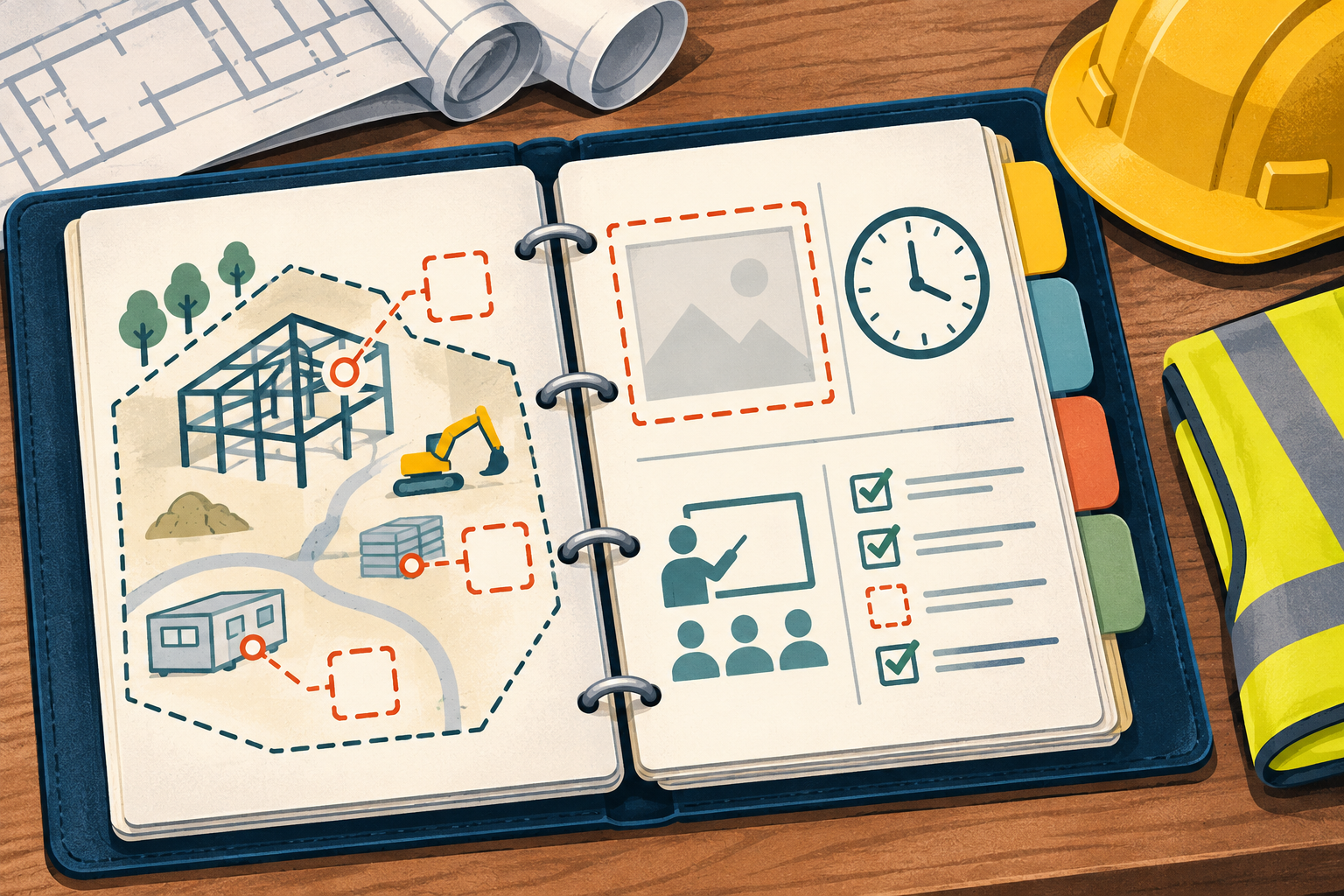
Small contractors can make an OSHA inspection harder to manage when the jobsite records are scattered, hazard checks are inconsistent, or nobody owns follow-up. Start with a simple routine: keep the inspection scope and dates, record site checks, keep training and correction notes together, and make sure each action has an owner. If a citation arrives, use the deadline and instructions on the actual notice. These steps help you organize the work. They do not guarantee that OSHA will issue or withdraw a citation.
For a response plan and bounded AI prompts, see our OSHA citation response prompt book. Keep safety decisions with people who understand the jobsite, the applicable standard, and the agency handling the case.
Seven gaps worth catching early
1. Nobody can say what the inspection covered
After a site visit, a supervisor may remember the conversation but not the exact scope. That gets messy when several projects are active. Keep the inspection number, officer details, date, work area, stated scope, and records requested in one brief.
OSHA’s inspection information explains that the opening conference covers the inspection purpose, scope, walkaround procedures, employee representation, and interviews. Write down the scope as explained. If it changes, note when and how you learned about the change. Do not treat the note as a legal conclusion. It is a record of what happened.
2. Jobsite checks happen, but no one records them
“We check the site every day” is difficult to verify after the crew has moved on. Construction standard 29 CFR 1926.20(b)(2) calls for frequent and regular inspections of jobsites, materials, and equipment by competent persons designated by the employer. Keep a dated note that identifies who checked, what area or equipment they checked, what they found, and what happened next.
A checklist is useful only if someone uses it. Do not fill out yesterday’s form from memory. If a hazard is found, record the control or stop-work action and the person who confirmed the area was safe to use.
3. Training records show attendance, not the topic
A sign-in sheet can show who was in the room. It usually does not show what the crew was taught, which work or hazard the training covered, or whether a worker needs more instruction after a task changes.
OSHA’s construction standards require employers to instruct employees in recognizing and avoiding unsafe conditions and the regulations that apply to their work environment. Keep enough detail to show the topic, date, instructor, workers present, and any follow-up. If the crew switches equipment or takes on a new task, review whether the training still fits.
4. Photos have no date, location, or context
Photos can help explain a condition. Without context, they may raise more questions. Keep the original image and add a separate note with the date, site area, person who took it, and what it is meant to show. If it documents a correction, record the correction date and who checked it.
Do not crop out a hazard or edit the file to make a scene look safer. If a photo is unclear, label that limitation and find another record. Honesty about a gap is better than presenting an image as proof of something it cannot show.
5. Corrective actions have no owner or verification step
When someone spots a hazard, the crew may fix it right away and move on. A week later, nobody remembers who made the change or whether the fix was checked. Use a short correction log with the hazard, immediate control, owner, date, and verification note.
Keep “done” separate from “planned.” If a guardrail was installed, note the date and inspection. If a training update is planned for next Monday, say it is planned. Do not write that the process is in place before it has actually started.
6. Injury and illness records are either overlooked or assumed to be required
Some employers must keep OSHA injury and illness records. Some establishments may be exempt based on industry or size, and other rules can apply. Do not decide from memory that your company is exempt or covered. Check OSHA’s current recordkeeping guidance for your establishment and ask a qualified person if the answer is unclear.
If your business is required to keep Forms 300, 300A, and 301 or equivalent records, check that they are complete and available. OSHA’s forms page explains the three forms and notes that equivalent forms may be used if they meet the regulatory requirements. Keep sensitive information protected. Do not attach employee medical details to a general project folder.
7. Someone confuses the inspection discussion with the citation deadline
A closing conference can help you understand apparent hazards, possible citations, correction options, and next steps. It is not the same as the written Citation and Notification of Penalty. If a federal citation arrives, record the receipt date and follow the instructions in that notice.
Under federal OSHA procedure, an employer generally has 15 working days after receipt of the citation to notify OSHA in writing if it intends to contest. OSHA says an informal conference does not extend that period or replace a written notice. State Plan procedures may differ. If you are weighing a contest, get qualified legal advice promptly rather than relying on a generic web article or an AI-generated summary.
A simple file structure for the next job
You do not need a complicated safety platform to get started. Pick one place for each active project and use the same basic folders. Make access limited to the people who need it.
| Folder | Keep here | Check |
|---|---|---|
| 01 Inspection | Notice, scope, dates, officer requests, follow-up | Is this the latest notice and is the receipt date recorded? |
| 02 Site checks | Daily or task-based check records, equipment checks, hazard reports | Can you see who checked and what they did with any issue? |
| 03 Training | Topic, date, instructor, attendance, follow-up notes | Does the training match current tasks and equipment? |
| 04 Corrections | Hazard, action, owner, date, verification | Are completed and planned work clearly separated? |
| 05 Records and review | Required injury records, advisor questions, submission copies | Is sensitive employee information appropriately protected? |
Ask AI to find gaps without making up answers
AI can help compare a notice with a document list. Give it a narrow job and tell it to show its work. Do not ask it whether a citation is valid or which legal strategy to choose.
Compare this OSHA inspection notice with the record index below. Do not interpret the law, decide whether a citation is valid, or create missing facts. Return a table with: (1) each item requested or cited, (2) records that may relate to it, (3) the date and source for each record, (4) gaps or inconsistencies, and (5) questions for a qualified safety professional or attorney. Keep planned corrections separate from completed corrections. If the record does not answer a question, write “not shown in the supplied records.”
Read every result beside the original document. A model can miss a date, confuse two jobsites, or summarize a blank form as a completed inspection. You own the final check.
Do this before the next inspection
- Assign a competent person for the required site, material, and equipment checks.
- Give the crew a clear way to report hazards and near misses.
- Keep training notes tied to the actual tasks and hazards.
- Record corrections with a person responsible and a verification step.
- Check which injury and illness recordkeeping rules apply to your establishment.
- Save inspection notices and calendar any dates shown on them.
OSHA’s construction safety program resources can help a small employer build a workable routine. A contractor can also contact the OSHA On-Site Consultation Program, which OSHA describes as no-cost and confidential for eligible small and medium businesses. It operates separately from enforcement, though serious hazards found through the program are expected to be corrected.
For the response sequence, see the OSHA inspection response workflow. If you have a specific question about the citation or records, start with the contractor OSHA Q&A. Reusable sheets will be in the OSHA response templates article. For AI help organizing the evidence file, read the main OSHA citation response guide.
Sources and limits
- OSHA construction standard 29 CFR 1926.20. Employer safety program and jobsite inspection requirements.
- OSHA: Education and Training. Guidance on worker training for hazard recognition and controls.
- OSHA: Injury and Illness Recordkeeping Forms. Forms 300, 300A, and 301 and equivalent record requirements.
- OSHA: Employer Rights and Responsibilities Following a Federal OSHA Inspection. Federal guidance on inspection outcomes and contest timing.
- OSHA: On-Site Consultation Program for Small Businesses. Program details for eligible employers.
This article provides general information and is not legal advice. OSHA duties depend on the work, employer relationship, standard, and jurisdiction. State Plans may use different procedures. Read the notice and current agency guidance for your case, and ask a qualified professional when needed.
Frequently asked questions
Does a small contractor have to inspect the jobsite regularly?
Federal construction standard 29 CFR 1926.20(b)(2) requires frequent and regular inspections by competent persons designated by the employer. Confirm the standards and duties that apply to the specific work and jurisdiction.
Do all small businesses have to keep OSHA injury logs?
No. Some establishments may be exempt based on size or industry, while other rules apply. Check OSHA’s current recordkeeping guidance for your establishment rather than assuming.
Does every OSHA inspection lead to a citation?
No. A citation may be issued after an inspection, but the written citation is the document that states the items, deadlines, and response instructions.
Can an informal conference extend a federal OSHA contest deadline?
No. OSHA’s employer-rights publication says an informal conference does not extend the federal 15-working-day period or replace the written notice required to contest.
Can AI determine whether a safety record is enough?
AI can flag missing fields or sort records, but a qualified person must verify the records, applicable standard, and jobsite conditions.
